Experts Say Electric Vehicles Are The Future But Rollout In Liberia Fa…
페이지 정보
본문
- Liberia is drafting its first zero-carbon emission vehicle policy as electric vehicles trickle into the country.
- Officials hoping new rules will attract investment, create jobs, cut pollution and give Liberians more control over their energy supply as the US/Israeli war on Iran has sent prices skyrocketing.
- Businesses say tax breaks, electric charging stations throughout the country and safety standards are urgently needed, warning Liberia risks falling behind other African countries already expanding electric transport.
By Nemenlah Cyrus Harmon, New Narratives climate correspondent
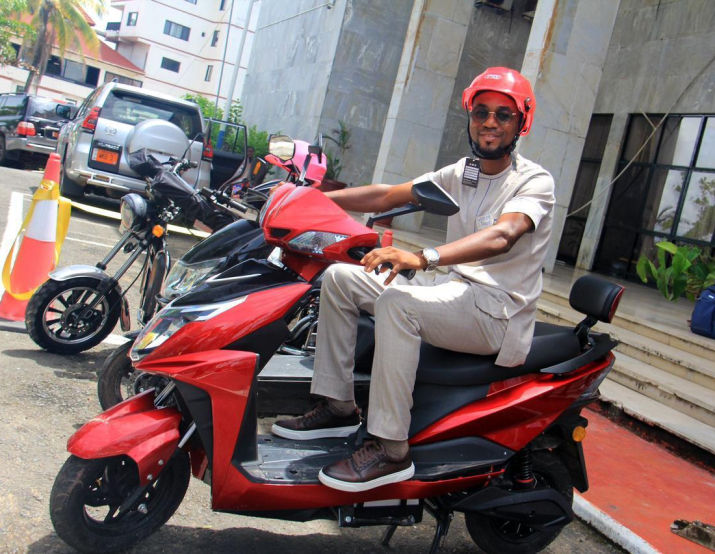
On the busy roads of this capital city, something is changing. Alongside the old pickup trucks and exhaust-spewing taxis, a quieter kind of vehicle has appeared: electric cars, motorcycles and three-wheeled tricycles that hum instead of roar. They charge on electricity instead of burning gasoline and leave no black smoke trailing behind them.
The electric vehicles are already here. But the rules to govern them and the infrastructure to expand uptake are not. And that is holding us back and continuing to make the economy vulnerable to global oil shocks like the one caused now by the US/Israel war on Iran.
“E-mobility in Liberia has been on a very slow pace,” said Prince Nanlee Johnson, an energy expert.
Electric vehicles are reshaping transport around the world, with sales surging across major economies as governments push to phase out petrol and diesel cars and businesses race to electrify their fleets. More than half of new cars sold in China in 2025 were electric.
Liberia’s total dependence on imported fuel, unreliable electricity grid, and lack of charging stations make the transition to electric vehicles a distant prospect at the moment. But experts say going electric is not an option. It is essential for giving Liberians control of their energy supply and cleaning up the air.
Under the Weah administration electric vehicles were not a priority. Now the Boakai government and a network of private businesses are racing to catch up. The Ministry of Transport and a coalition of renewable energy companies known as the Liberia Energy Access Practitioner Network are drafting what would be Liberia’s first-ever policy for zero-emission vehicles.
“We want to reduce our emissions, create job opportunities and have technological benefits,” said Spencer Taylor Jr., director of climate and environment at the Ministry of Transport, in an interview.
 Spencer S. Taylor Jr., director of climate and environment at the ministry of transport, photo supplied
Business executives say the absence of a policy has created headaches for anyone trying to do business with electric vehicles in Liberia. Currently an importer bringing in an electric vehicle faces basic unanswered questions: What tax will be charged at the port? Where will customers recharge the vehicle? What safety standards apply? With no written policy in place, there are no clear answers.
The coalition of renewable energy business received funding from the Rockefeller Foundation, an American philanthropic organization, to help the ministry develop the policy. The project has been underway for more than a year. A final document is expected this month.
“A lot of things need to be done, because when we open a business we want to be sustainable,” said Royston Gbelia, president, Liberia Energy Access Practitioner Network.
The policy being drafted is not just about allowing electric vehicles to ply the streets, said Spencer Taylor. It is a framework for an entirely new system. Among the most important elements is lower import taxes for electric vehicles. The idea is to make clean vehicles cheaper and more attractive for businesses and ordinary people.
“Once you have a dollar or two reductions on anything, it’s a way of informing the public that you really meant what you are saying,” Taylor said.
Charging Station Network Is an Essential First Step
Experts say there will also need to be major investment in a charging infrastructure anywhere the vehicles may travel. A charging station is like a gas station for electric vehicles. Instead of filling up with gasoline or diesel, drivers plug the vehicle into a machine that sends electricity into the battery. In countries that use many electric vehicles, charging stations are placed along roads and in parking lots so people can easily recharge. Without public charging stations, drivers have to charge at home or at work, which can limit how far they feel safe traveling.
“If I was a private investor and I want to bring in a zero-emission vehicle, there’s no charging stations. How do I charge my vehicle?” said Gbelia. “How do I charge it, if I drive from Broad Street all the way to the other side of the city?”
“If you deploy new vehicles without building the supporting infrastructure, it becomes a dead rock,” said Johnson.
 Some of the e-motorcycles operating in Monrovia, photo supplied by the Ministry of Transport
The policy would also establish quality standards, so that vehicles imported into the country are safe and durable. And it would clarify roles for agencies including the Ministry of Mines and Energy, the Environmental Protection Agency, and the Rural Renewable Energy Agency.
Government vehicles are part of the plan too. Liberia’s National Transit Authority, the government agency responsible for providing and managing public transportation services across the country. It operates buses and other vehicles to commute citizens, but its buses run on diesel. The new policy envisions the agency acquire electric buses.
“Government should take responsibility, should take the step, should take the lead,” Taylor said.
Interim Measures Have Encouraged Some EV Imports
Early government action has already opened the door for electric vehicles. In 2025, President Boakai issued an executive order suspending import tariffs on off-grid solar renewable energy products. The order covers solar panels, batteries, control units, energy-efficient appliances, and other off-grid systems. Importers are required to pay only the customs user fee and must be registered with the Rural and Renewable Energy Agency, the government agency responsible for expanding access to electricity in rural areas where the national power grid does not reach.
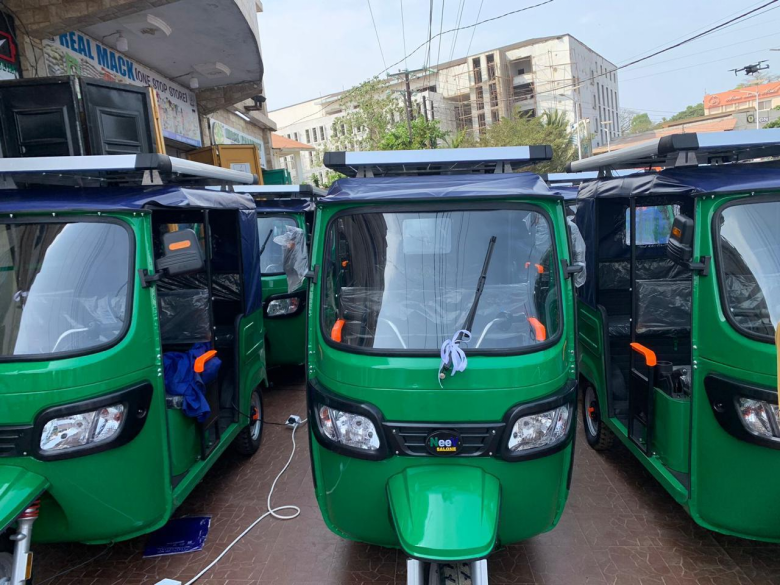
Most companies operating electric vehicles in Liberia import them in spare parts and assemble them locally. One such company is Emergi Liberia, which operates three-wheeler electric vehicles. Although electric vehicles are not explicitly listed, key components such as batteries, solar panels, inverters, and control units qualify for duty-free waivers.
But the company says that is not enough. Slow processing by port workers adds to costs.
“So then you get a duty waiver on import duties, but you still have to pay high storage fees,” said Elvis Thomas, co-founder of Emergi Liberia. Thomas said the storage fee can be as high as $US70 a day in some cases, and a container can spend a month at the port before it is cleared.
Thomas’ company does not sell its tricycles but instead leases them—primarily to female riders, in order to promote women in the transport sector. The company operates a charging station powered by both solar energy and the national grid. This reporter was not granted access to the charging station while the owner was out of the country. Thomas says the tricycles take about five to six hours to fully charge and can run for roughly the same number of hours before the battery dies.
Another company, New Energy Electric Vehicles of Liberia, one of the first businesses to introduce electric vehicles in the country in 2024, says it has imported 12 electric cars, 20 tricycles and 150 electric motorcycles.
Woodrow Mentar Jr., the company’s managing director, said his business was too early to benefit from the executive order granting duty waivers, though he declined to specify the amount he paid. The company sells its electric cars for between $US50,000 and $US80,000, while electric motorcycles sell for about $US2,500. The tricycles are also leased to drivers for commercial use.
Mentar said once fully charged, the cars can run for several days, while the motorcycles operate for about 18 hours and the tricycles for eight to nine hours. But there are challenges.
“The main thing is the power source,” Mentar said. “Once you get electricity and stable current, then it works — which our country doesn’t really have.”
 Royston Gbelia at the launch of e-vehicles in Monrovia, photo supplied the Ministry of Transport
Why It Matters: The Air, the Climate, and Your Lungs
Liberia’s transport sector is one of the biggest climate problems. According to Taylor, vehicles on the road account for roughly 43 percent of the country’s total carbon emissions. Carbon is the gas most responsible for global warming and climate change.
Carbon emissions don’t just warm the planet. They also make the air dirty. A 2024 Frontpage Africa/New Narratives report found air pollution is a leading silent killer in Liberia responsible for 52 percent of deaths from stroke and heart disease. On average air pollution in the country is seven times higher than WHO guidelines recommend.
Anyone who has stood in traffic in Monrovia knows the feeling: a thick smell, eyes that sting, smoke from old engines hanging over the road. Experts say when motorbike riders die of heart attacks or stroke at relatively young ages – in their 30s and 40s – air pollution is likely a factor.
The country has strong incentives to get going faster with electric vehicles. In 2016, Liberia signed the Paris Agreement, a global deal in which countries promised to cut carbon emissions. As part of that commitment, Liberia filed what is called a Nationally Determined Contribution — a plan to reduce emissions. The country set a target of cutting its nationwide carbon emissions by 64 percent before 2035.
The transport sector has its own goals: a 15 percent reduction in emissions by 2035; full zero-emission transport by 2050. Experts say increasing the number of electric vehicles will be key to achieving that.
By 2029, the plan promises to introduce at least 2,000 electric three-wheelers (kekehs) and 2,300 electric motorcycles for commercial use with the ultimate goal to increase the fleet to more than 6,000 by 2035, transition to 20 percent of the National Transit Authority bus fleet and 10 percent of all vehicles to use cleaner power sources, including solar, electric and Compressed Natural Gas.
There are also important cost benefits for drivers. “We know how much fuel a regular car uses,” said Gbelia. “When you’re using electricity to charge your vehicle, the family is also saving a lot.”
Fossil fuels such as gasoline and diesel made from carbonized plants and animals buried deep in the ground. When burned in engines, they release carbon dioxide and other pollutants into the air, contributing to global warming and air pollution.
관련링크
-
- Next post
- Closing the Gap: Agriculture Ministry Expands BCRP Team to Deliver Results for Farmers
- 26.04.17
댓글목록
Mai Regalado님의 댓글
Mai Regalado 작성일All has their own preferences for movie, but HDBlackAss has a wide collection to choose from if you're seeking for black prostitutes. If stunning black girls make you feel the hard on, I advise you check out HDBlackAss for free. https://cvcentrum.hu/cegek/nudespics/ https://theudtaullu.com/@lenahagai51924?page=about
Phillis Duffield님의 댓글
Phillis Duffiel… 작성일The most well-known warm porn tube on the net, Experience TubePorn.TV! The horniest and sexiest women who appear in the finest sex clips you've ever seen are the most spooky thumbs up! Pick from a big selection of inspiring video films in any genre. https://eduxhire.com/employer/mature-naked/ https://m.my-conf.ru/winfredo249307